
Monterey County Previous Residents by Era
Tracing previous residents works best when each source has a clear era and question. The APN and current document number anchor the address; the Recorder connects title; directories and census records place people there; maps and permits test the physical story.
| Source | Years It Covers | Where Held | What It Shows |
|---|---|---|---|
| Recorder current index | 1978-present | Monterey County Recorder | Parties, documents, dates, transfers |
| Historical Recorder indices | 1850-1977 | Recorder historical books | Grantor and grantee references |
| City directories | 1884, 1889, and 1905-1997 runs | Salinas and Monterey libraries | Residents, businesses, occupations, addresses |
| Reverse directories | Haines 1976-present; Hill-Donnelly 1974, 1990, 2001 | Monterey Public Library | Address, occupant, phone, B/R marker |
| Federal census | Decennial through 1950 | NARA and library databases | Households at an enumeration address |
| Sanborn maps | 1885, 1888, 1892, 1905, 1912, 1926, 1962 | Monterey Public Library | Footprint, material, use, address context |
| Permits | Dates vary | City or county jurisdiction | Work, applications, status, participants |
Start with the current parcel for a modern address. For a nineteenth-century question, move from the 1850-1977 index to directories, newspapers, maps, and the released census. A title such as “Monterey” may cover only a city, the Peninsula, or selected rural routes, so check each volume’s scope.
Start a Monterey County House History with an APN
The Monterey County GIS Mapping and Data route is the address bridge. In the Parcel Report App, “Find address or place” offers up to six locator suggestions. The Parcels tool accepts an APN or APN_FORMAT partial match, also capped at six results. Select the right parcel, then save its formatted APN, legal description, subdivision, jurisdiction, and creating, current, or terminating document numbers.
GIS exposes parcel geography and document clues, not an owner or mailing address. Carry the APN to the Monterey County Property Inquiry, where the public search uses Fee Parcel Number or Assessment Number, with a 12-digit value or a partial value of at least six digits and no punctuation. It does not accept an owner name or street address. For a present-day street walk, the Monterey County by-street workflow keeps this parcel step in its proper place.
Trace Monterey County Deeds Backward
Once the APN and current document number are known, the title trail can move backward without treating a street number as a permanent identity. Use an approved assessment channel for current ownership evidence, then obtain the recorded instrument through the Monterey County Recorder’s recorded-document service.
- Locate the current acquisition deed and copy its grantor, grantee, recording date, document number, and legal description.
- Search the seller as an earlier grantee, then match the APN or legal description before accepting the name match.
- Repeat the seller-to-earlier-grantee step through the 1978-present current index.
- At 1977, switch to the 1850-1977 historical indices and use the reel, page, or document reference to view the older instrument.
- Note gaps, releases, trusts, maps, and changes in legal description rather than forcing every entry into one ownership story.
- Grantor
- The person or entity transferring an interest.
- Grantee
- The person or entity receiving that interest.
- Chain of title
- The linked sequence of transfers for one parcel.
- Legal description
- The formal land description that can remain stable when an address changes.
- Criss-cross directory
- An address-oriented directory that reverses the usual name-first lookup.
Cross the 1978 Monterey County Recorder Divide
Monterey County’s official-record trail has two working eras. Current Official Records cover 1978-present, while separate historical indices cover 1850-1977. The combined Assessor-County Clerk-Recorder serves researchers at 168 W. Alisal Street, first floor, Salinas. Counter hours are Monday-Friday, 8-noon and 1-5, with recording ending at 4. Confirm closures before travel.
A counter or mail request should identify the recording year, at least one party exactly as indexed, document type, and document number or reel/page. Copies are $2 per page, certification is $2 per document, and maps are $5 per page. These identifiers make the jump from a modern deed to an older book much safer than a broad address search.
Name-First Monterey County Directories
The Monterey Public Library house-history guide warns that early directories are indexed by name only. The shelf begins with L.L. McKenney in 1884 and the 1889 Monterey County directory of adult residents in county townships, then moves through Perry, Weybret-Lee, E.C. Rust, Peninsula Directory, and Polk runs. Search surname variants, initials, diacritics, and compound names before deciding that an address is absent.
Known names make the early books useful. An address without a name may require paging through entries and checking the title page for geography. The city-directory collections themselves, including publisher and year details, are gathered on the Monterey County city directories page.
The Mayo Hayes O’Donnell Library digital collections add searchable local context, including Noticias del Puerto and more than 2,500 Peninsula Diary columns with fields such as Name, Role, Building, Organization, Location, and Topic.
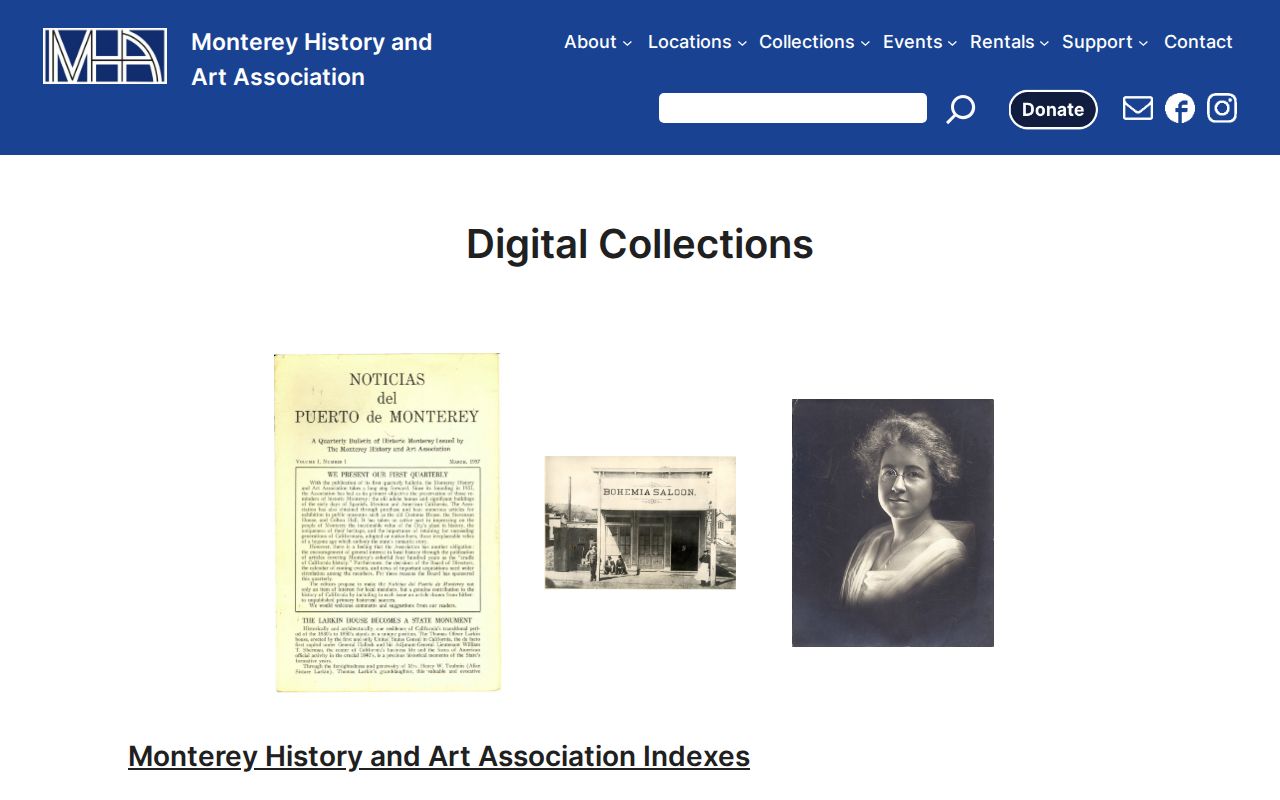
Those local-history materials can connect a former address to a building, business, organization, or neighborhood story without replacing the deed or directory evidence.
Haines and Hill-Donnelly Find Past Residents
Haines changes the search direction. The house guide lists Haines reverse directories from 1976-present as address-to-occupant sources with telephone and a business/residence marker. Hill-Donnelly Cross Reference volumes cover selected 1974, 1990, and 2001 editions for Monterey and San Benito counties. Together they are the strongest address-first tools for recent past residents.
Neither series proves title or present occupancy. Copy the address, occupant, phone, and B/R notation exactly as printed, then compare the result with a deed date, permit, obituary, or nearby directory year. A missing name may mean a coverage gap, a spelling variation, a move, or a changed number.
Pair Monterey County Previous Residents with Census Households
Directories show a name at an address or business. Released federal census schedules add the household layer. The current public series reaches through 1950 under the 72-year rule, while the destroyed 1890 census leaves a local gap that the 1889 directory, a local 1890 Great Register item, and newspapers can partly fill.
- Choose a directory edition and record its exact community, street spelling, name, and address.
- Pair it with the nearest released census year, then identify the correct enumeration district in the National Archives census resources.
- Compare the household at the address with the directory line, allowing for missed entries, moves, military service, death, and number changes.
- Repeat across adjacent years and cite the source for each person instead of treating a single match as proof.
An enumeration district is the area assigned to an enumerator. It helps narrow the census search, but it is not the same thing as a parcel or legal description.
Read Monterey Sanborn Maps and Corrections
Sanborn maps test whether a house, shop, or outbuilding fits the address story. Monterey holdings include March 1885, May 1888, March 1892, May 1905, August 1912, August 1926, and 1962. Corrected sheets include a 1912 base corrected in 1924 and 1926 bases corrected in 1949, 1956, and 1959/1960.
Use the Library of Congress Sanborn collection alongside the Monterey shelf. A pasted correction can change the map face without dating the structure to the correction year, so inspect the correction index. Fragile originals are available by archivist appointment. Maps show footprint, material, use, and address context, not a complete list of people who lived there.
Bridge New Monterey’s Late-1930s Number Change
Old address searches can fail in New Monterey for a physical reason. The official context study says many streets, including Lighthouse Avenue, were renumbered in the late 1930s. Block hundreds stayed in place, while individual numbers shifted as more lots became occupied.
When a directory or deed seems to vanish, compare the number before and after the change. Match block, cross streets, lot or legal description, and Sanborn footprint. This bridge keeps a changed address from becoming a false endpoint in the trail of Monterey County previous residents.
Close the Monterey County Previous Residents Trail
Obituaries and probate are useful endpoints, not shortcuts. An obituary can connect a directory line to relatives, a cemetery, or a former community. A Monterey Superior Court probate file may add a will, estate filing, or heir reference. Use the court’s civil, family, and probate records instructions and the CI-115 search and copy form, then corroborate names and dates with the address trail. If a related case is federal, the PACER federal court route is separate from the Monterey portal.
Birth-family questions have a separate official path. Adoption records and original birth records are sealed unless a statutory consent or court process applies. California explains the difference between an authorized and informational copy before a requester chooses a certificate route.
The California original birth certificate instructions describe the court petition route for an original record.
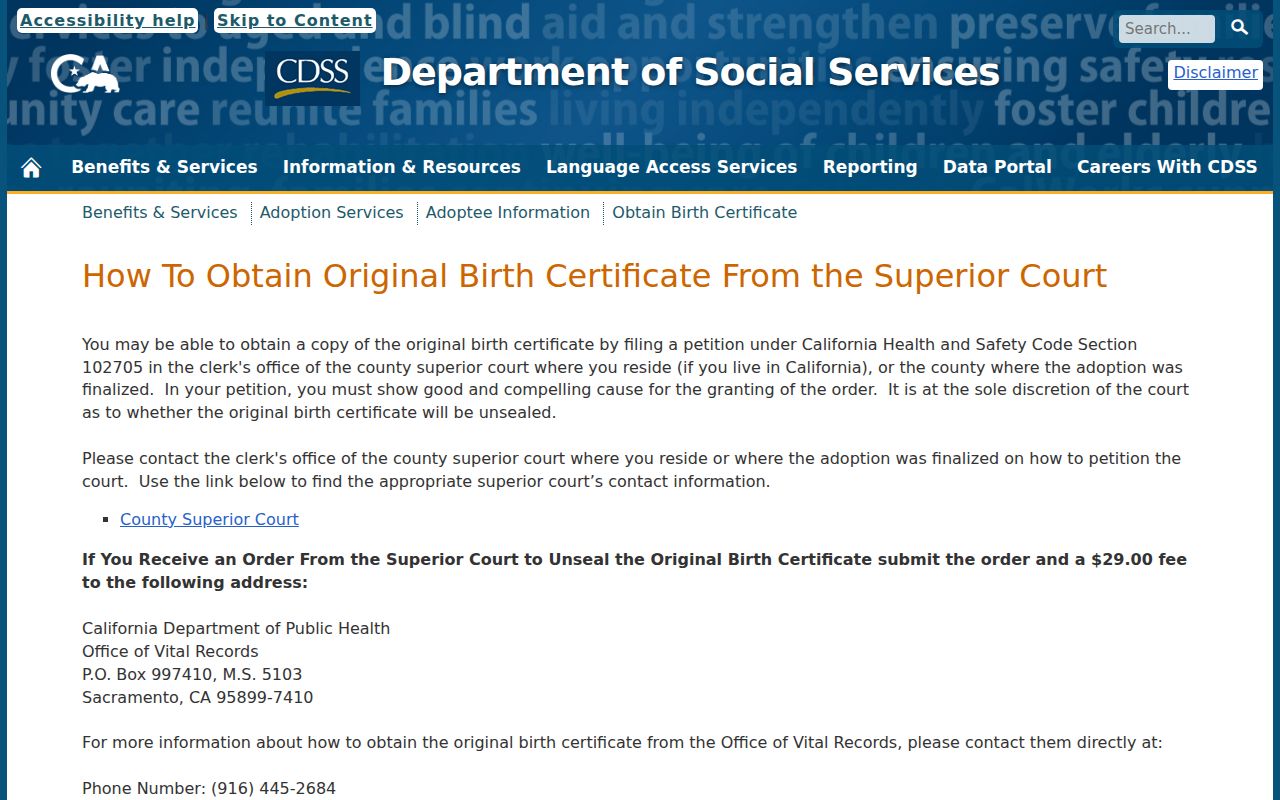
That route does not turn previous residents into a public name list. For consent and contact options involving adoptees, birth parents, or siblings, the California adoptee information guidance is the appropriate starting point.
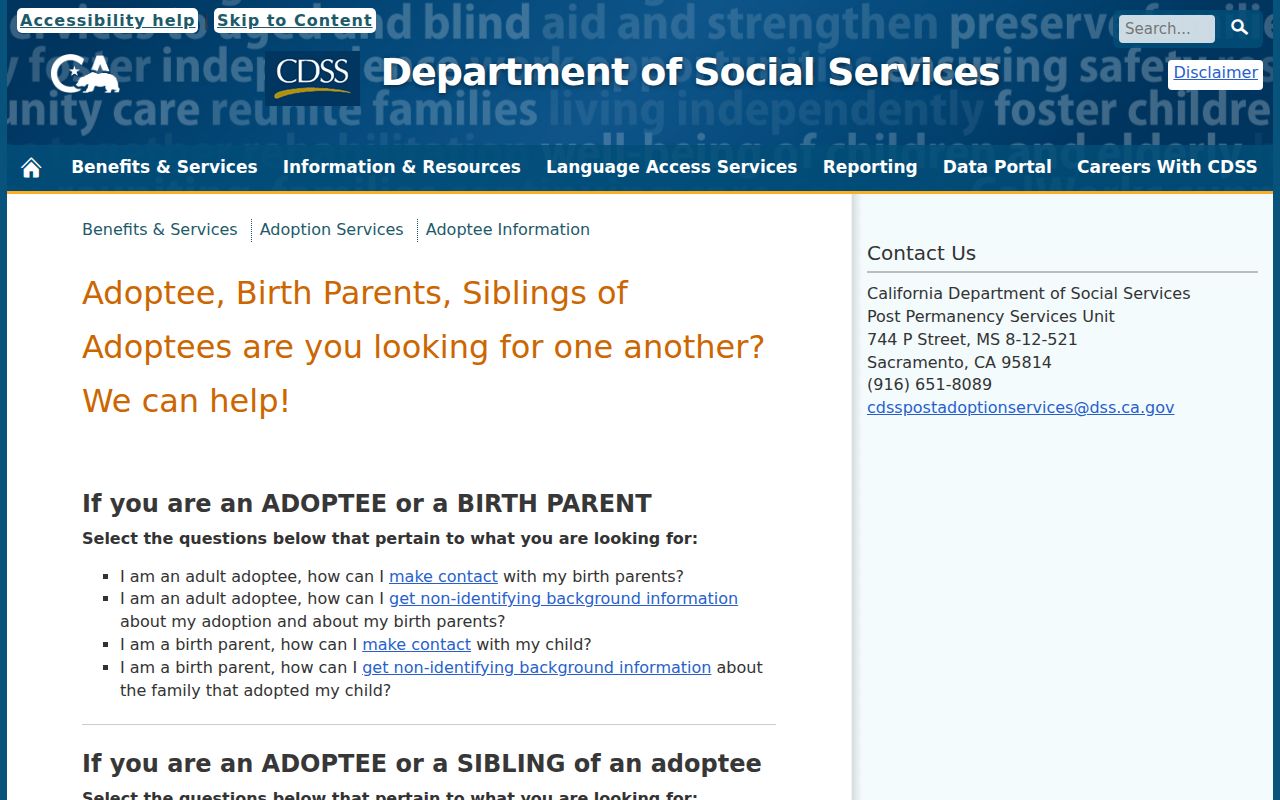
Use those official routes for family reconnection, and keep directory or obituary clues separate from proof of a birth relationship.
Use CPRA for a Missing Monterey County Record
The California Public Records Act, or CPRA, is a fallback when a known permit file, index series, document range, or map is not online. Monterey County accepts identifiable-record requests through its NextRequest portal. State law generally calls for an agency determination within 10 calendar days, with up to 14 more days for unusual circumstances. That is a determination period, not a promised delivery date.
Inspection is free; duplication charges can cover direct copying costs, and an agency need not create a new record. Give the custodian the APN, legal description, document number, date range, and office when possible. Ask for an existing record, not a broad list of living people, and expect protected information to be withheld.
Lawful house history. Monterey County previous residents research belongs to genealogy, house history, estate work, and personal curiosity. Do not use an address trail to stalk, harass, intimidate, or pressure a living person. California stalking and civil-harassment laws still apply when a record is public.